Ballet Basics with Dani Grace: Ready, Set, First Position! 🩰
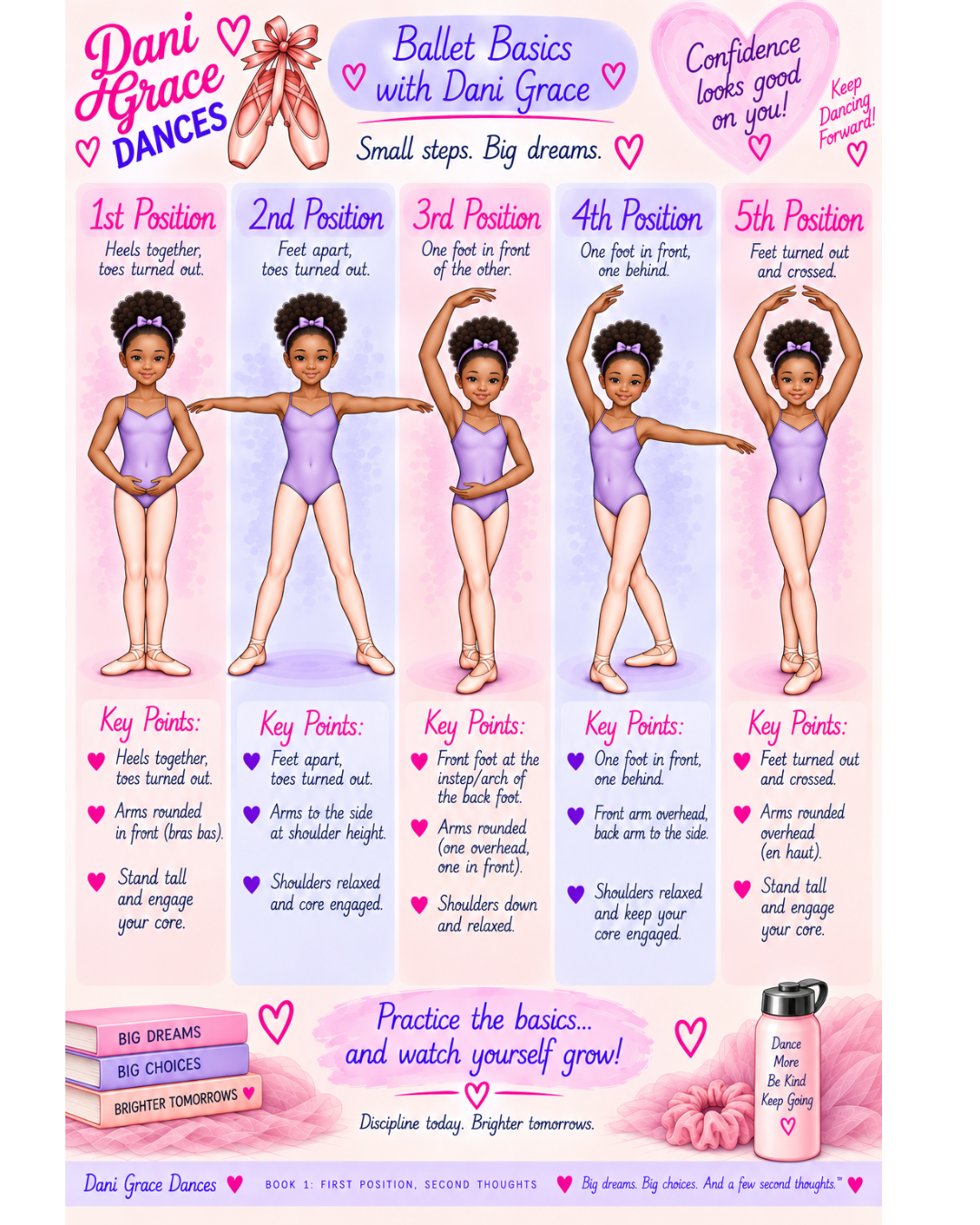
Every ballerina has to start somewhere.
Before the turns, leaps, costumes, and that magical moment when the curtain goes up, there are the basics. And in ballet, it all starts with five positions.
They may look simple, but there’s a lot happening at once: legs turned out from the hips, shoulders relaxed, arms held just so—and somehow you’re supposed to remember to smile!
So whether you already know your plié from your passé or you’re wondering what in the world those words mean, I am here to walk you through the five basic ballet positions.
Ready? Take your place. 🩰
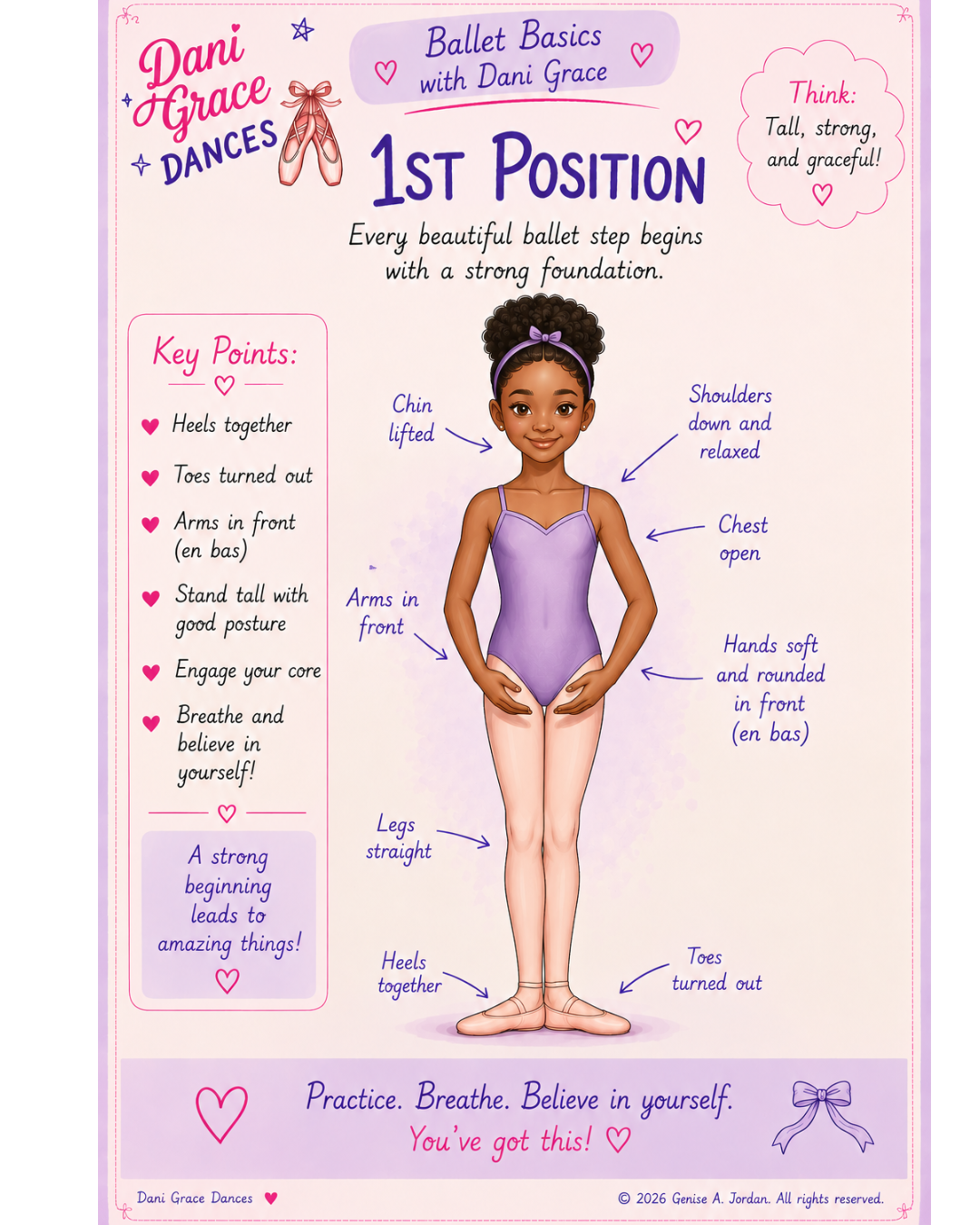
First Position: Hug the Invisible Beach Ball
Start with your heels together and your toes gently turned out, making a little V with your feet.
Now round your arms in front of your belly button as though you’re hugging an enormous beach ball.
An invisible beach ball, obviously. Bringing an actual one to ballet class might raise a few eyebrows.
Stand tall, relax your shoulders, and resist the urge to squeeze that imaginary ball flat.
Dani Grace’s tip: You’re going for graceful ballerina, not someone trying to carry every grocery bag into the house in one trip.
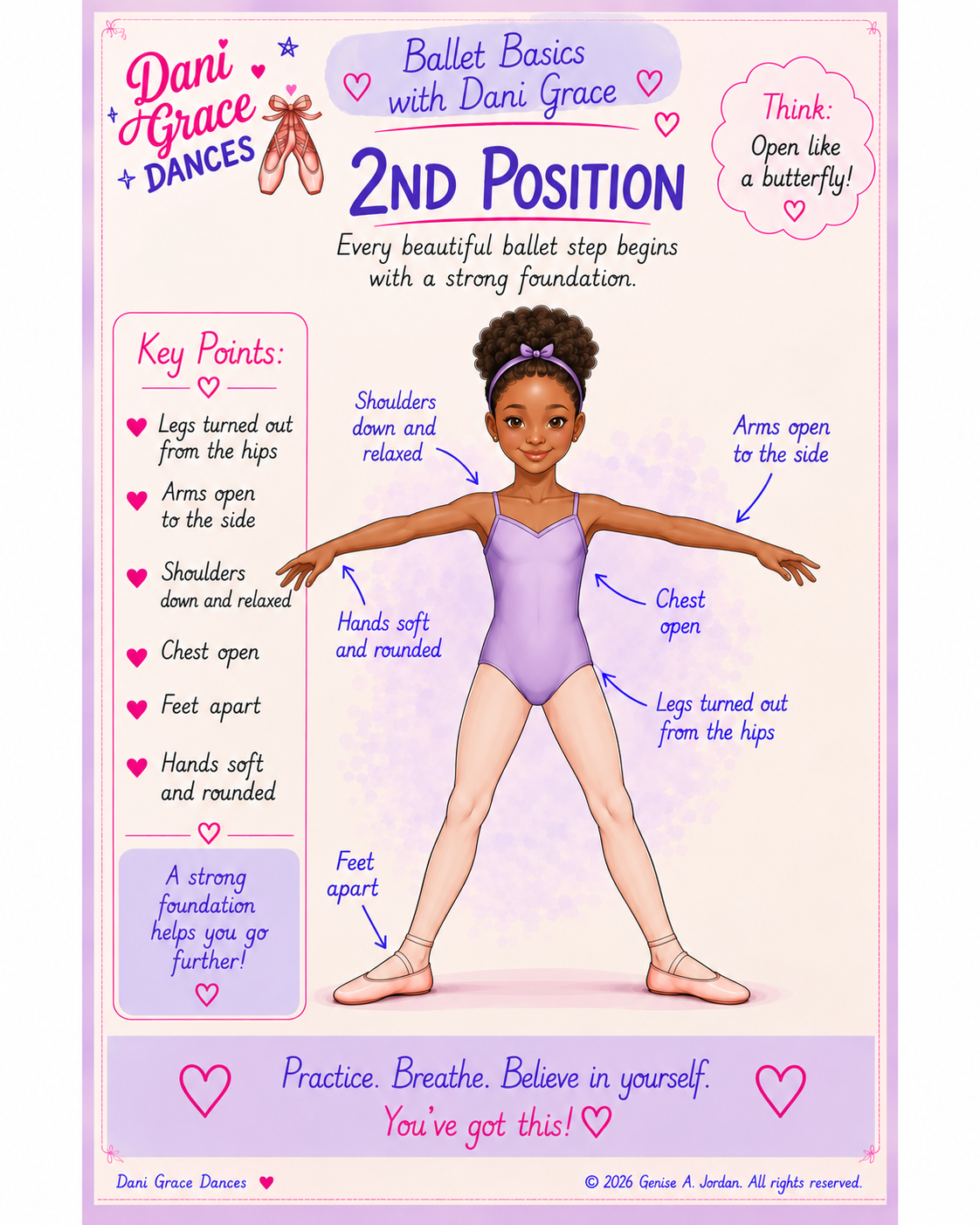
Second Position: Arms Open Wide
Move your feet apart while keeping your legs turned out from the hips.
Open your arms softly to the sides. Keep your shoulders down, your chest open, and your hands relaxed and rounded.
Second position is also a great place to practice a plié (plee-AY). That’s a knee bend, and dancers use pliés to prepare for jumps, land softly, and stay balanced.
Yes, even bending your knees has a fancy French name.
Welcome to ballet.
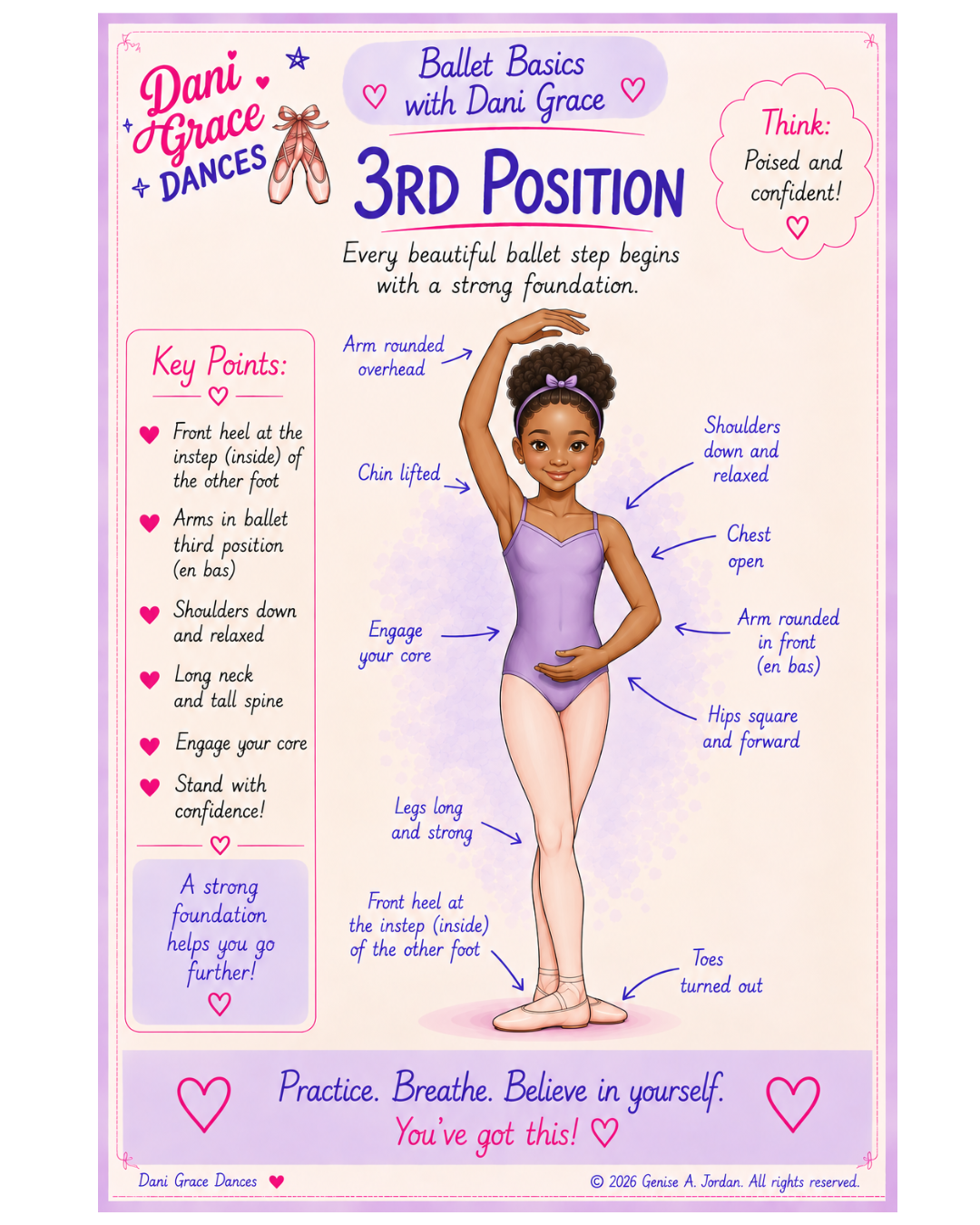
Third Position: One Foot, One Arm, One Big Question
Place one foot in front of the other, with your front heel near the middle of your back foot.
For your arms, round one in front of you in first position and open the other to the side in second.
Now switch sides.
Wait. Which arm goes where again?
If you need a moment to untangle yourself, you’re in excellent company. Learning ballet sometimes feels like asking your arms and legs to follow two completely different sets of instructions.
They’ll figure it out. Eventually.
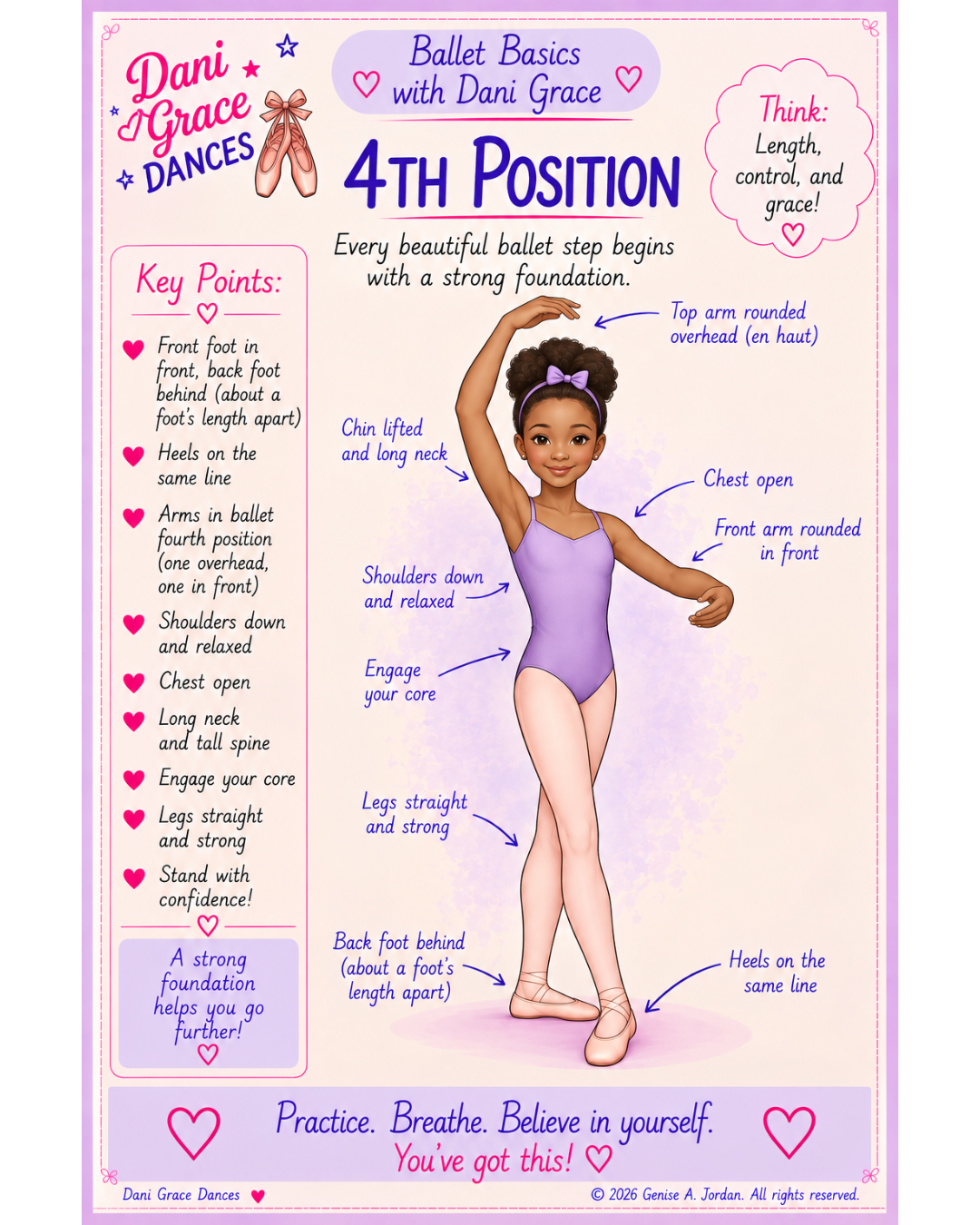
Fourth Position: A Little Space, a Lot of Balance
Place one foot in front of the other, leaving some space between them.
Lift one rounded arm overhead and keep the other rounded in front of you.
Look at you! You’re practically posing for a ballet poster.
Fourth position can challenge your balance, so take your time. You don’t need to wobble dramatically to prove you’re working hard.
Although if you do wobble, we’ll pretend it was choreography.
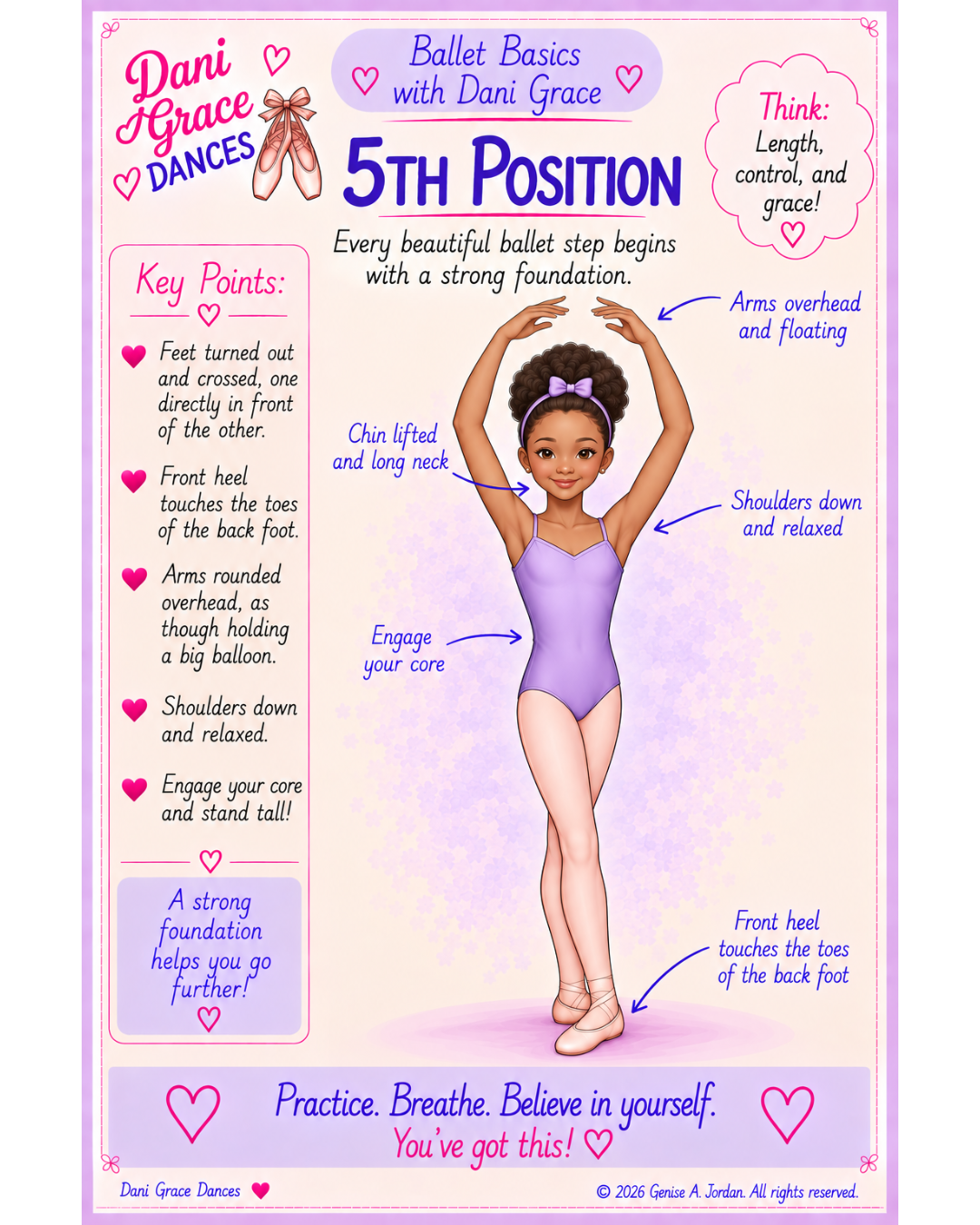
Fifth Position: The Grand Finale
Bring your feet into a close, crossed position, with each heel near the opposite foot’s toes.
Now raise both arms overhead in a soft, rounded circle—like a halo.
A ballet halo, that is. No actual angel wings required.
Fifth position takes practice. Don’t force your turnout. Remember, turnout comes from the hips—not from twisting your knees or ankles.
And remember: strong arms, not floppy noodles!
You’ve got this.
Bonus Ballet Words to Impress Your Friends
Now that you know the five positions, you’re ready for a few more words from Ballet Glossary: Dani Grace’s Edition.
A tendu (tahn-DEW) is when you stretch your foot along the floor until your leg is straight and your toes are pointed. Think of your foot drawing a line across the floor.
A relevé (ruh-leh-VAY) is when you rise onto the balls of your feet. Suddenly, you’re taller!
Sadly, this does not count toward growing three inches overnight.
And a passé (pah-SAY) is when you lift one foot toward the knee of your standing leg. Imagine your toe politely saying hello to your knee.
“Good morning, Knee.”
“Why, hello there, Toe.”
Ballet is a very sophisticated art form.
Five Positions Down. A Whole Lot of Dancing to Go.
The five positions are just the beginning. There are jumps to learn, turns to practice, and plenty of moments when your feet seem to have their own opinions.
Dani Grace knows all about that.
In Dani Grace Dances: First Position, Second Thoughts, Dani Grace is determined to shine in ballet. But between challenging classes, changing friendships, and a few choices she wishes she could take back, she discovers that becoming a dancer takes more than learning the steps.
Want to keep practicing with Dani Grace? You’ll find even more ballet terms in Ballet Glossary: Dani Grace’s Edition at the back of the book.
Ready?
Five, six, seven, eight!
Keep dancing, keep dreaming, and please—no noodle arms. 🩰💗